A documentation team can read the writing rules and still produce passive, ambiguous text. A procedure may contain several actions in one sentence, or use different names for the same part. Readers then need to stop and decide what the instruction means. Worked examples show how to revise that text into direct instructions.
These Simplified Technical English examples focus on common writing problems: passive voice, long sentences, noun strings, and inconsistent terms. Each worksheet includes a before-and-after rewrite and a self-test. Writers can try the task before checking the answer.
The examples are original and explain the principles in plain language. ASD-STE100 is a controlled language, not just a preference for short sentences. Its framework combines writing rules with a controlled dictionary of approved words. The official ASD-STE100 specification provides the exact requirements. STE Guide is an independent educational resource. It isn't an official ASD source.
Table of Contents
- 1. Splitting a Long Procedure Sentence Into Single Instructions
- 2. Replacing Non-Approved Words With Approved Vocabulary
- 3. Rewriting a Warning With the Hazard First
- 4. Converting Passive Voice to Active Voice
- 5. Reducing Noun Strings in Technical Titles and Steps
- 6. Using One Term for One Object Throughout a Manual
- 7. Writing Short UI Labels and Button Instructions
- 7 Simplified Technical English Examples Compared
- How to Use These Worksheets in Training
1. Splitting a Long Procedure Sentence Into Single Instructions
A technician removes a cover, checks an O-ring, and decides whether to replace it. One sentence can hide that sequence. Separate instructions make each action easier to follow.
Before
After removing the cover, which is held by four screws, check the O-ring for damage and replace it if necessary, then refit the cover.
After
Remove the cover. Check the O-ring. If the O-ring is damaged, replace it. Install the cover.
Each instruction gives one action. The condition comes before the action it controls. This sequence works like a checklist: the technician can complete and track each step in order.
Worksheet
Practice task: Rewrite this passive instruction in active voice before checking the answer.
The filter must be inspected before the housing is closed.
Answer
Inspect the filter. Then close the housing.
The revised steps name the actions directly. The writer should confirm who performs each action and preserve the required order. Start each step with a verb. Put a condition before its action, and include only details needed to complete the task.
See the writing rules for procedures for further guidance. Writers should check the official specification before releasing instructions. A technical reviewer should also confirm that each step preserves the work sequence and safety information.
2. Replacing Non-Approved Words With Approved Vocabulary
A sentence can sound simple and still use a word in a meaning that the STE dictionary doesn't approve. Controlled vocabulary requires writers to check both the word and its intended meaning. A shorter synonym isn't automatically a valid replacement.
Before
Utilize the test kit to commence the inspection of the pump.
After
Use the test kit to start the inspection of the pump.
The revised sentence replaces formal verbs with familiar choices. The sentence still needs a dictionary check before it can be treated as an STE example. The official dictionary defines approved words, their parts of speech, and their meanings.
Worksheet
A maintenance instruction might refer to a test kit in one paragraph and an inspection kit in another. If both terms identify the same item, the variation can make readers wonder whether the manual describes different equipment. A project term list can help writers keep names and actions consistent.
Practice task: Convert this passive sentence to active voice before checking the answer.
The inspection result must be recorded by the operator.
Answer
Record the inspection result.
The answer names the action directly. Before applying a similar edit to a real document, the writer should confirm that the person responsible for the action is clear from the procedure.
Check uncertain words in the ASD-STE100 dictionary. Writers can also keep a project list of preferred terms for common actions and equipment. During review, they should search for synonyms that may have entered the text unintentionally.
The wording shown above illustrates a possible simplification. It doesn't replace a check against the official vocabulary and rules. A text can be readable but still fail to meet the specification if it uses a word with an unapproved meaning or part of speech.
3. Rewriting a Warning With the Hazard First
A warning should make the hazard and the action to avoid clear. Indirect phrasing can hide the key instruction inside a long sentence. Direct wording helps a reader identify the risk before acting.
Before
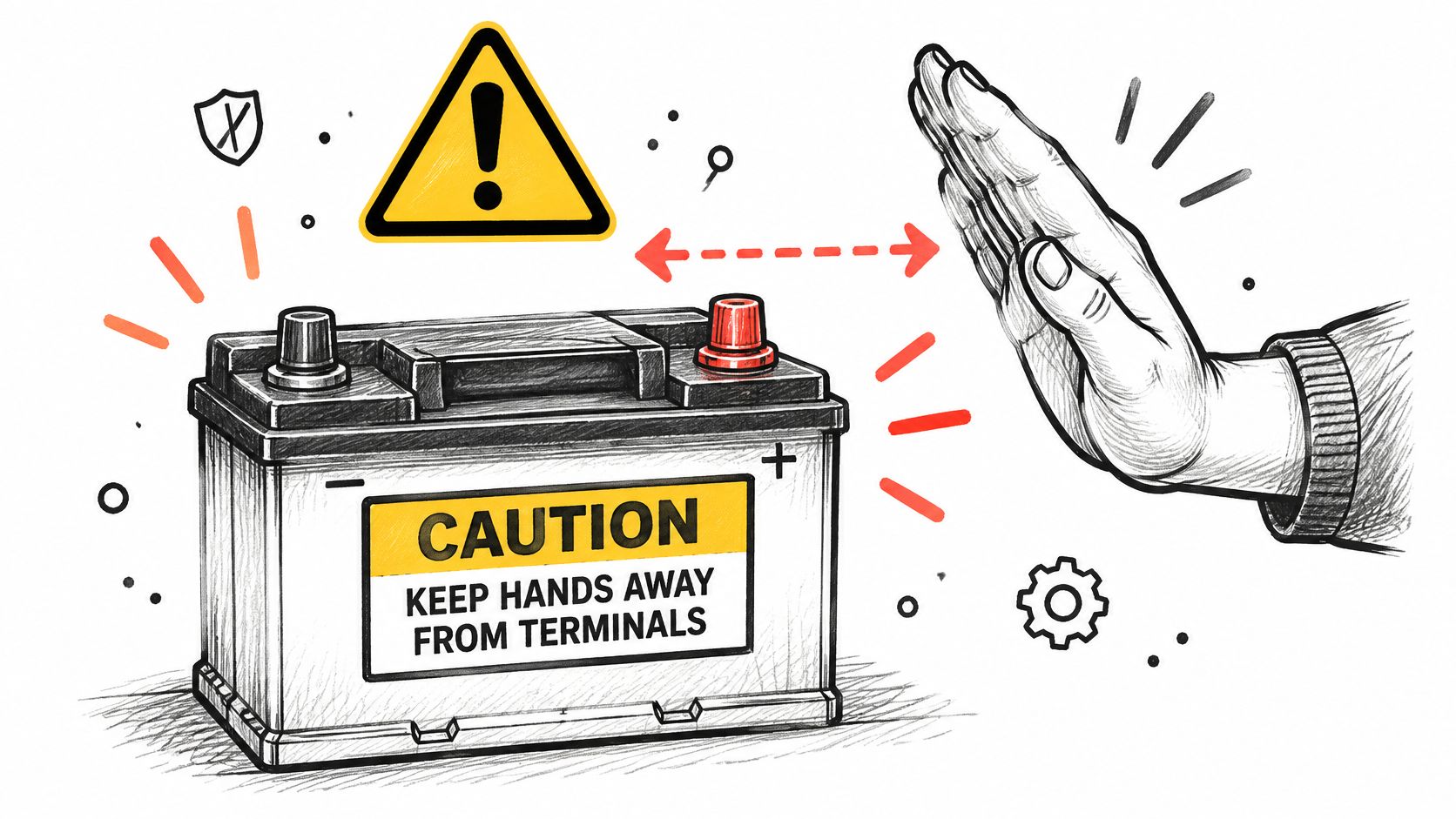
Care should be taken that the battery is not short-circuited, as this may possibly cause a fire.
After
WARNING: Do not short-circuit the battery. A short circuit can cause a fire.
The rewrite names the unsafe action directly. It also states the possible consequence in a separate sentence. The warning doesn't ask the reader to infer what “care should be taken” means.
Worksheet
A technician may work near a battery during inspection or repair. A warning that names the prohibited action gives the technician a clear instruction. The responsible technical expert must verify that the hazard description matches the product and task.
Practice task: Convert this passive sentence to active voice before checking the answer.
The battery terminals must not be touched by the technician.
Answer
Do not touch the battery terminals.
The active sentence tells the reader what not to do. A warning writer should put the hazard first and use a direct verb for the action to avoid.
For further guidance, consult the writing rules for warnings and cautions. The exact warning format must come from the official ASD-STE100 specification and the organization's safety requirements. A subject matter expert should review each warning before publication.
4. Converting Passive Voice to Active Voice
Passive sentences can leave the person responsible for an action unclear. In procedures, a direct command often tells the reader what to do without naming an unnecessary actor.
Before
The fluid level should be checked by the technician before the engine is being started.
After
Check the fluid level. Then start the engine.
The rewrite removes the passive forms and separates the actions. It also gives the reader a clear order. The sentence doesn't need “by the technician” if the procedure addresses the technician.
Worksheet
A service manual may describe a routine check before engine operation. Passive voice can obscure the task, especially when the sentence also contains timing information. Writers can look for a form of “be” followed by a past participle, then decide whether a direct command fits.
Practice task: Convert this passive sentence to active voice before checking the answer.
The connector must be secured by the mechanic before the panel is closed.
Answer
Secure the connector. Then close the panel.
A command works when the intended reader performs the action. If another person or system performs it, the writer should name that actor instead of forcing the sentence into a command.
Review point: Active voice helps identify the actor. It doesn't remove the need to check who performs each task.
The writing rule summaries explain the active-voice principle in the wider context of the specification. Writers should apply the rule consistently across procedure steps, while checking that each edit preserves the technical meaning.

5. Reducing Noun Strings in Technical Titles and Steps
A long sequence of nouns can hide the relationship between parts of a phrase. Readers may not know which noun describes the equipment, the test, or the required check. A preposition can make that relationship clearer.
Before
Hydraulic system pressure test equipment calibration interval check.
After
Check the calibration interval of the hydraulic pressure test equipment.
The rewrite makes the action visible at the start. It also uses “of” to show what interval the writer means. The technical meaning still needs review, because a clearer phrase must preserve the correct equipment name and task.
Worksheet
An engineering team may use a title such as “cooling system valve position sensor inspection.” The writer should identify the main action and the relationship between the components before editing. A change to a part name can create a technical error, even when the sentence reads more smoothly.
Practice task: Convert this passive sentence to active voice before checking the answer.
The sensor cable must be examined by the technician.
Answer
Examine the sensor cable.
First, identify the main verb. Then add a preposition if it clarifies how the nouns relate. Confirm part names with the engineering team before changing an established technical term.
The guidance on noun clusters can help writers review dense phrases. The final wording must still match the product's terminology and the official specification.
6. Using One Term for One Object Throughout a Manual
A technician reads a procedure beside a parts diagram. If the procedure says “cover” and the diagram says “lid,” the technician may wonder whether they name the same part. Use one approved term for each object throughout the manual.
Before
Remove the cover, housing, or casing from the unit. Then detach the lid from the body.
After
Remove the cover from the unit.
The shorter instruction assumes that all four terms name one part. The writer must confirm this with the engineering team before changing the procedure. Different terms may identify different components.
Worksheet
Check procedures, captions, labels, and diagrams for consistent part names. A term list helps reviewers find variation, much like an index helps readers locate a subject.
Practice task: Convert this passive sentence to active voice before checking the answer.
The access panel must be removed by the operator.
Answer
Remove the access panel.
Keep “access panel” if that is the approved product term. Do not replace it with “cover” unless the product team confirms both terms refer to the same part.
Create a term list before drafting. During review, search for possible synonyms and confirm each term against product documentation and the official dictionary. A heuristic checker can flag some likely vocabulary or consistency issues, but its results need human review.
7. Writing Short UI Labels and Button Instructions
A user changes a setting, then looks for a way to save it. A clear label helps the user match the instruction to the control on screen.
Before
In order to persist your changes, please click on the Save button.
After
Click Save. Your changes are saved.
The command names the action and uses the button label. The next sentence states the result. Check that “Save” matches the interface, including capitalization and punctuation when they affect the label.
Worksheet
A user may need to save a setting before leaving a page. Short instructions can name the control and state the result without extra wording. Concise labels can also make text easier to adapt for other languages.
Practice task: Convert this passive sentence to active voice before checking the answer.
The new settings must be selected by the user.
Answer
Select the new settings.
The command names the actor through its implied subject, the user. Confirm that the user selects the settings, rather than entering or enabling them.
Use a verb and an object in a label when they match the interface. Remove phrases such as “in order to” when they add no needed meaning. Additional software and interface examples can help writers compare complex wording with direct instructions.

7 Simplified Technical English Examples Compared
| STE Example | Core Rule | Main Benefit | Best For | Key Trade-Off |
|---|---|---|---|---|
| Splitting Long Procedure Sentences | One instruction per short sentence | Makes steps easier to follow and review | Maintenance procedures | Adds sentences; action grouping needs care |
| Replacing Non-Approved Words | Use approved, consistent vocabulary | Reduces ambiguity and supports translation | Controlled technical documents | Writers must learn approved terms |
| Rewriting a Warning With the Hazard First | State the hazard and avoid-action directly | Makes safety information easier to recognize | Warnings and cautions | Requires hazard analysis; wording can feel abrupt |
| Converting Passive Voice to Active Voice | Make the actor and action clear | Improves scanability and reduces uncertainty | Procedures and task instructions | Restructuring may be needed to preserve meaning |
| Reducing Noun Strings | Use short phrases to show noun relationships | Makes titles and steps easier to understand | Technical titles and descriptions | Phrases may be longer; part names need review |
| Using One Term for One Object | Use the same name consistently | Prevents confusion and supports search | Manuals with repeated parts or systems | Requires team agreement and term audits |
| Writing Short UI Labels and Button Instructions | Use concise verb-object wording | Improves comprehension and localization | Software interfaces and messages | Very short text may lack context |
How to Use These Worksheets in Training
Give trainees the “before” sentence first. Ask each person to rewrite it before showing the model answer. This sequence lets trainees practise identifying the problem instead of copying the finished wording.
Compare the trainee's version with the “after” version. Ask which words changed and whether the rewrite keeps the original technical meaning. A rewrite can be shorter but still be wrong if it removes a condition, changes an action, or misidentifies a part.
For team practice, collect passive sentences from current drafts. Ask trainees to convert each sentence to active voice before reviewing the proposed answer. Then discuss who performs the action and whether the procedure states the correct sequence.
Review Each Rewrite Before Release
Run each draft through the free STE checker as a first pass. The checker can flag possible vocabulary and writing issues. It is a heuristic aid, not an official conformity assessment.
After that first pass, confirm the wording against the official ASD-STE100 Issue 9 specification. The specification is the authoritative source for exact requirements. This educational page explains principles and examples, but it doesn't provide official certification.
A trainer can also ask trainees to explain why a revision works. They might identify a separate instruction, a direct verb, or a consistent part name. That explanation helps reviewers distinguish a useful edit from a change that only sounds simpler.
Build Practice Into Document Review
Writers and engineers can use a small set of real sentences from manuals, procedures, and interface text. Each trainee can revise one sentence, check the vocabulary, and explain any technical question that needs an expert decision. This keeps language review connected to the product and its tasks.
Documentation managers can use the exercises during onboarding or team reviews. Translators can compare the source sentence with the revision and flag unclear technical relationships before localization. The same practice can support aerospace, defense, manufacturing, software, and other technical work, while the official specification remains the source for exact STE requirements.
STE Guide explains ASD-STE100 rules and controlled vocabulary through worked examples, practice exercises, and a free heuristic checker. Visit STE Guide to continue practising and find links to the official specification.